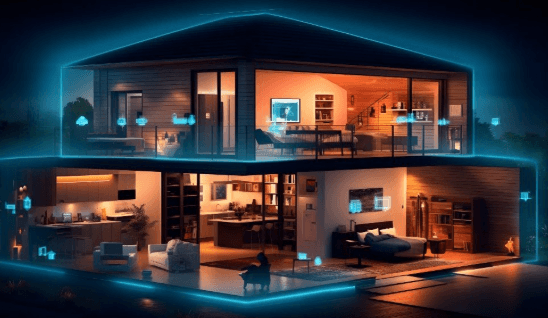

Connected homes today blend smart lighting, energy dashboards, and interoperable devices into a scalable ecosystem. Privacy, data handling, and security must align as architecture, governance, and audits evolve. Platform choice and open APIs shape compatibility and future-proofing, while disciplined usage sustains autonomy. The balance between convenience and risk remains delicate, inviting scrutiny of governance models and technical trade-offs as the landscape shifts—and what emerges next could redefine household autonomy and control.
What a Connected Home Really Looks Like Today
A connected home today integrates and automates core functions through a centralized network of interoperable devices, platforms, and cloud services. The setup emphasizes Smart lighting and energy dashboards while maintaining Privacy, data and security work together under shared governance. Choosing platforms and interoperability for your home enables Designing responsible smart habits and future proofing your setup with disciplined, transparent integration and measured flexibility.
How Privacy, Data, and Security Work Together
Privacy, data, and security intersect as a triad that governs how a connected home operates and evolves.
The analysis treats privacy tradeoffs as design constraints, not barricades, informing user choices while preserving functionality.
Data governance emerges as the framework aligning collection, storage, and utilization with policy and consent.
Security controls translate governance into reliable, auditable protections without sacrificing user autonomy.
Choosing Platforms and Interoperability for Your Home
Selecting platforms and ensuring interoperability are foundational to stable, scalable smart homes; the decision framework weighs ecosystem compatibility, standardization, and long-term maintenance over immediate feature novelty.
The analysis emphasizes platform interoperability as a governance lens, assessing product ecosystems for open APIs, cross-brand support, and update cadences, enabling modular expansion while preserving security, reliability, and user autonomy within interoperable, freedom-oriented configurations.
Designing Responsible Smart Habits and Future-Proofing Your Setup
From the prior focus on platform interoperability, the design of responsible smart habits and future-proofed setups emphasizes disciplined usage patterns, data stewardship, and scalable security practices.
The analysis frames smart etiquette as behavioral norms guiding device engagement, while data ethics governs collection, storage, and sharing.
Practitioners pursue modular architectures, regular audits, and transparent disclosures to sustain secure, adaptable, freedom-respecting environments.
See also: Connected Devices and Privacy Concerns
Frequently Asked Questions
How Much Does a Typical Connected Home Setup Cost Upfront?
A typical upfront cost ranges widely, but a basic connected home kit averages $1,500–$3,000, with expansions pushing higher. The cost breakdown includes hardware, installation pitfalls, and potential monthly services, while upfront budgeting favors scalable kit recommendations.
Which Devices Are Safest to Buy for Beginners?
Safest devices for beginners emphasize beginner friendly protocols and device security basics, prioritizing user accessibility in a smart home setup; analysts note reputable hubs and vendor-supported devices reduce risk, enabling gradual expansion while maintaining robust security posture.
Can You Integrate Legacy Appliances With New Smart Tech?
Integrating legacy appliances with smart tech is feasible via bridges or hubs; a hypothetical retrofit shows a 1990s thermostat controlled by a modern hub. Integrating legacy appliances supports Smart migration strategies, enabling secure, scalable home automation.
How Do You Recover Data After a Device Failure?
Data recovery options depend on failure type; professionals recommend immediate containment, drive health assessment, and iterative recovery attempts. Backup strategies should prioritize redundancy, off-site storage, and verified restores to minimize downtime and preserve user autonomy.
Are There Universal Standards for Device Security Updates?
The answer: There are no universal standards for device security updates; frameworks exist, but adoption is uneven. Universal standards would improve device security, cost upfront varies, beginners safety improves with clear guidance, governance, and interoperable update protocols.
Conclusion
A meticulous mosaic materializes: modular middleware melds mayhem into measurement, manufacturing a manageable metropolis. Privacy precedes practicality, permitting prudent power and protected profiles. Platform poise promotes parallel, participatory progress; protocols, permissions, and prudent audits propel persistent reliability. Security stands sturdy, safeguarding sensitive signals from sly subsystems. Smart habits shape sustainable schedules, while scalable schemes secure supplementary system-wide symmetry. In this disciplined domain, deliberate design, documented decisions, and diligent governance drive durable, decoupled, and delightful digital domiciles.


 By
By

 By
By